TL;DR
Florida coastal homes have always had a job to do — protect from heat, use the breeze, and stay standing through the storm. And despite ever-evolving design aesthetics across British West Indies, contemporary, modern, and more, they still have that same job to do.
Designers are rethinking what it means to live on the coast. Homes are sitting higher, breaking into pavilions, and turning courtyards into the new heart of the plan. Clean lines are in, but so are rich textures. Darker woods, grounded palettes, and handcrafted materials are making a quiet return.
While this post is about what’s trending, it’s also about what lasts. Architecture shaped by climate, lived experience, and a growing desire for homes that feel natural and deeply personal.
Here’s what’s shaping Florida coastal design in 2026.
Environment & Resilience Determine New Design Directions
Elevated Homes
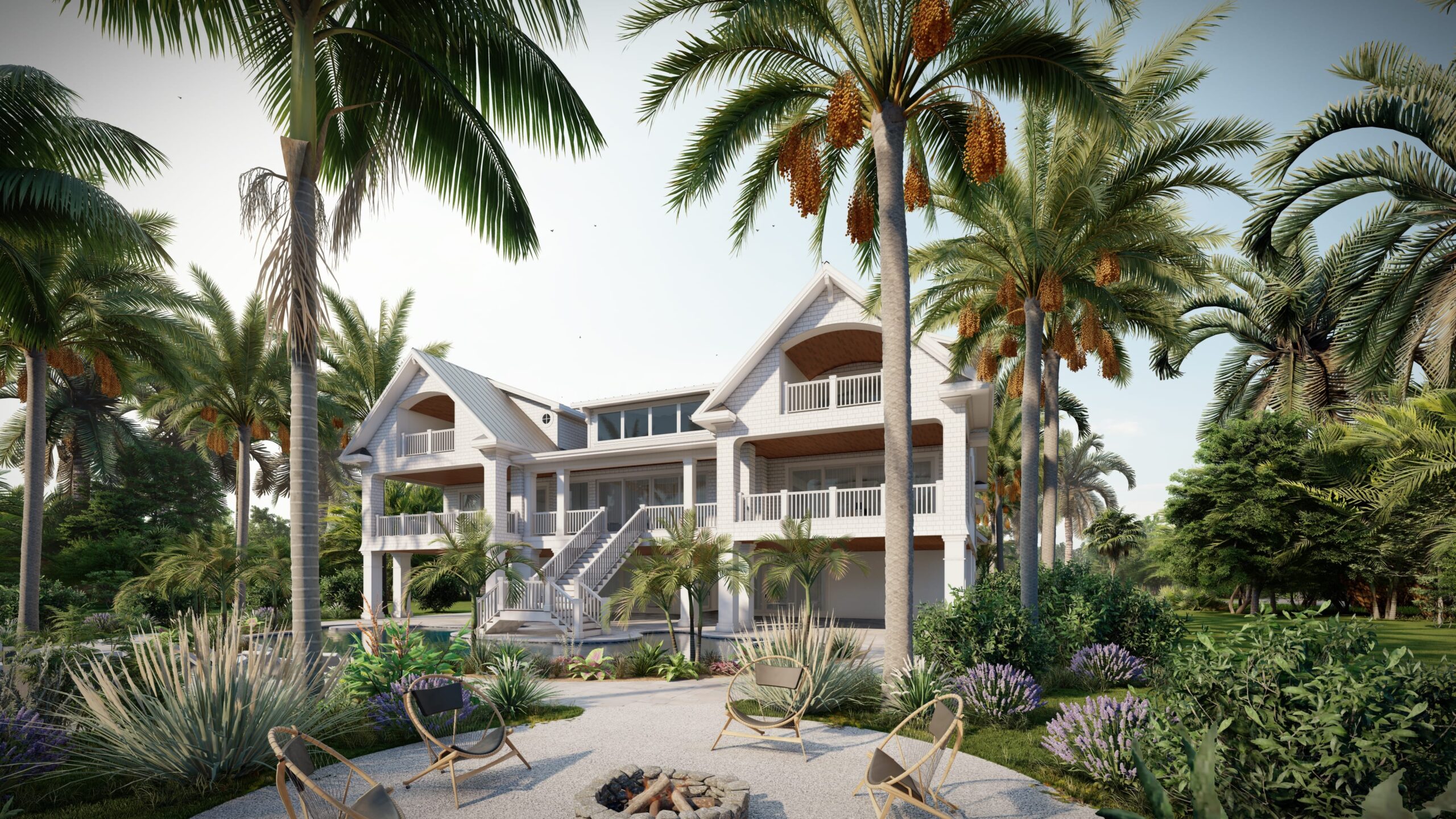
Main living levels are going up for protection from flooding and as a breakaway or flow-through space: breezy loggias, open-air lounges, or parking wrapped in screening and latticework.
The goal? Meet code, mitigate flood risk, and still create a home that feels grounded, not perched.
Designers are using elevation to their advantage. Stairs are softened with lush landscaping and arrival sequences stretch longer and more dramatically. From the inside, views might be clearer with stronger airflow, thanks to the height.
Solar + Storage
Thanks to Florida’s expedited permitting laws and newly passed HB 683, getting solar approved is faster and less expensive (sometimes in under five days). That’s made photovoltaic systems more appealing on new coastal builds.
Battery backup, once considered a luxury, is now a key feature in storm-prone regions. With frequent outages and grid instability, homeowners are asking not just about generating power, but keeping it long after the grids go dark.
Architects are responding by integrating solar and storage directly into the home’s architecture — tucking panels into flat roof planes, hiding inverters in utility cores, and making battery walls part of the interior spec.
Even as net metering policies evolve, the resilience value holds. Coastal homeowners are looking for self-reliance.
Coastal Architecture in Florida: How Homes Are Shaped in 2026
A Shift Toward Indoor–Outdoor Spaces
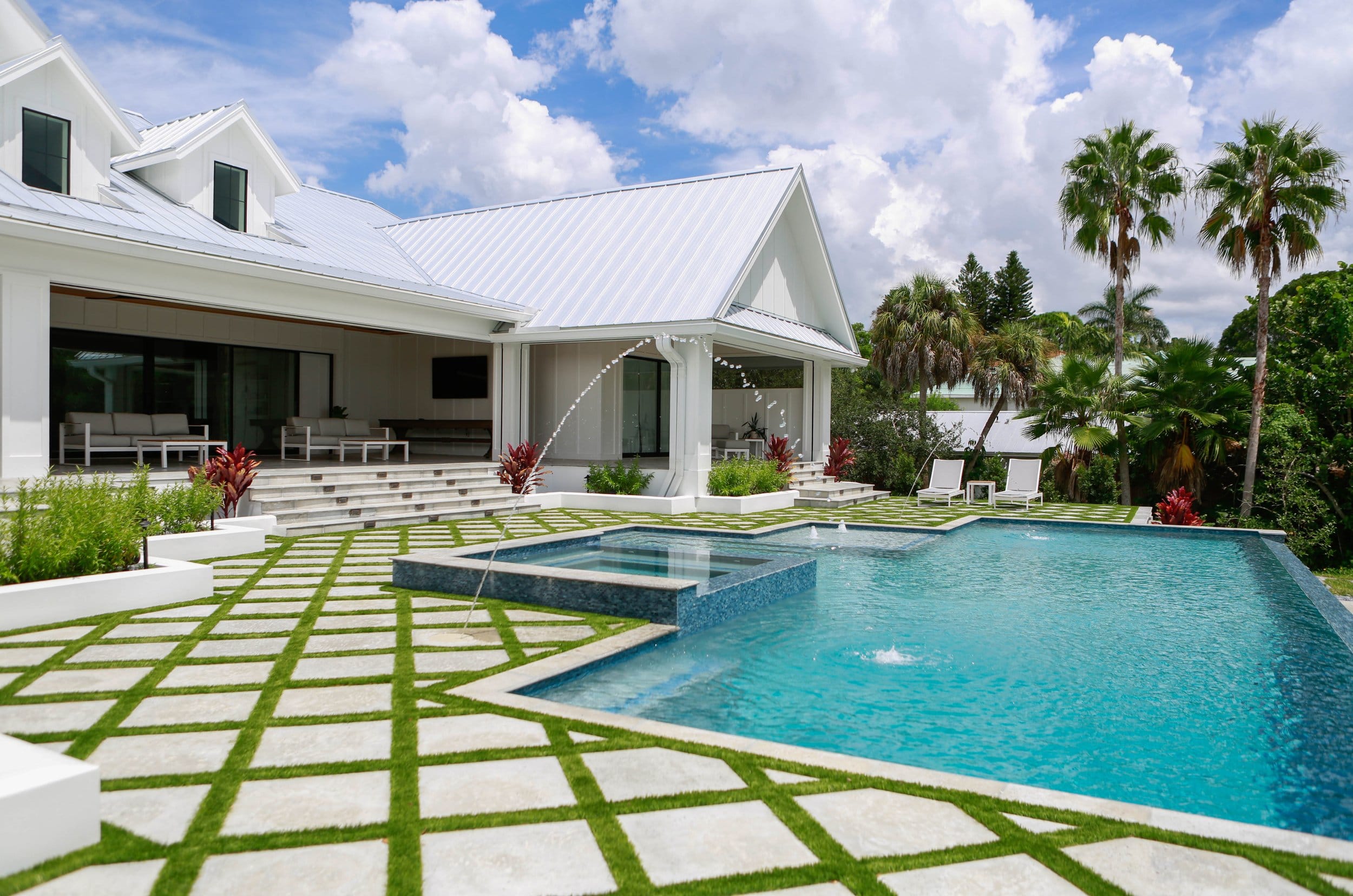
In 2026, designers are moving away from single, tightly enclosed volumes in favor of plans that blur the line between interior and exterior. Homes are increasingly composed of connected indoor–outdoor spaces rather than one continuous box.
Main living areas open fully to the outdoors, while private spaces like bedrooms, offices, and guest suites may be separated into distinct wings. These zones are linked by breezeways, covered walks, open-air connectors, or courtyard passages that allow light, air, and landscape to move through the home.
This can influence comfort as much as beauty. By breaking the plan into connected parts, architects create natural airflow paths that support cross-ventilation and passive cooling. Breezeways provide shade and relief from heat, courtyards moderate temperature and offer privacy, and open pavilions make time spent outdoors more comfortable.
With the right design, pavilions can function much like interior rooms — places to lounge and watch TV, cook and dine, or gather poolside — offering comfort on par with indoor spaces while remaining open to air and landscape.
Architecture as Art: Statement Homes in Coastal Florida
Custom homes, especially on the coast, are increasingly sculptural and personal, in line with modern home designs.
Nowhere is this more visible than in Miami and Florida’s most design-forward waterfront enclaves, where homes are being treated as singular works. You might see facades designed like canvases, staircases as installations, rooflines that become floating forms.
Owners are seeking statement homes. That might mean a monolithic front elevation with zero visible windows. Or a glass cube elevated on pilotis. Or a series of garden walls that reveal the house only once inside the courtyard.
Every detail is carefully composed. There’s a new boldness in asymmetry, negative space, and tactile contrast — smooth stucco against charred wood, or polished plaster against poured concrete.
For designers, this opens a creative frontier. It’s residential architecture as an experience — marrying artistry and practicality.
Material & Aesthetic Shifts Defining the 2026 Look
High-Performance Materials
Design is only as good as what it’s made of and in Florida’s coastal zones, the materials have to do more than look good. They have to endure.
In 2026, architects are specifying smarter, tougher materials that hold up to salt air, humidity, heat, and time without compromising aesthetics. The goal is minimal maintenance with maximum longevity.
We’re seeing:
- Porcelain cladding and pavers that mimic stone or wood, but resist fading, cracking, and erosion — perfect for sculptural exteriors and barefoot terraces.
- Thermally modified woods like ash or cypress, which offer rich color and dimensional stability even in high humidity.
- Fiber-cement trim and composite shutters, hand-detailed to look like wood, but engineered to last for decades.
- Powder-coated aluminum replacing steel for modern detailing — lighter, corrosion-resistant, and more precise.
- Structural glass systems that create entire transparent wall planes without sacrificing storm resistance.
With the right materials, designers can achieve clean lines, warm tactility, and long-term resilience all at once.
Deeper Tones and the End of All-White Coastal
The coastal white-on-white palette isn’t disappearing but in 2026, it’s no longer the default. A new wave of homes is trading bleached minimalism for something more grounded: richer tones, moodier textures, and a more confident use of contrast.
Designers are leaning into dark-stained woods, charcoal metals, sand-colored stucco, even blackened bronze. Interiors echo the shift with slate flooring, warm plaster finishes, and natural materials that age gracefully — linen, oak, unlacquered brass.
The new coastal palette still feels calm, but with more nuance. A weathered teak ceiling warms a gallery-white hallway. Midnight blue shutters anchor a light façade.
The result is still unmistakably coastal but with a new kind of sophistication. Less beach house cliché, more architectural clarity. The kind that won’t yellow in the sun or fade with the next trend cycle.
The Return of Serious Natural Materials
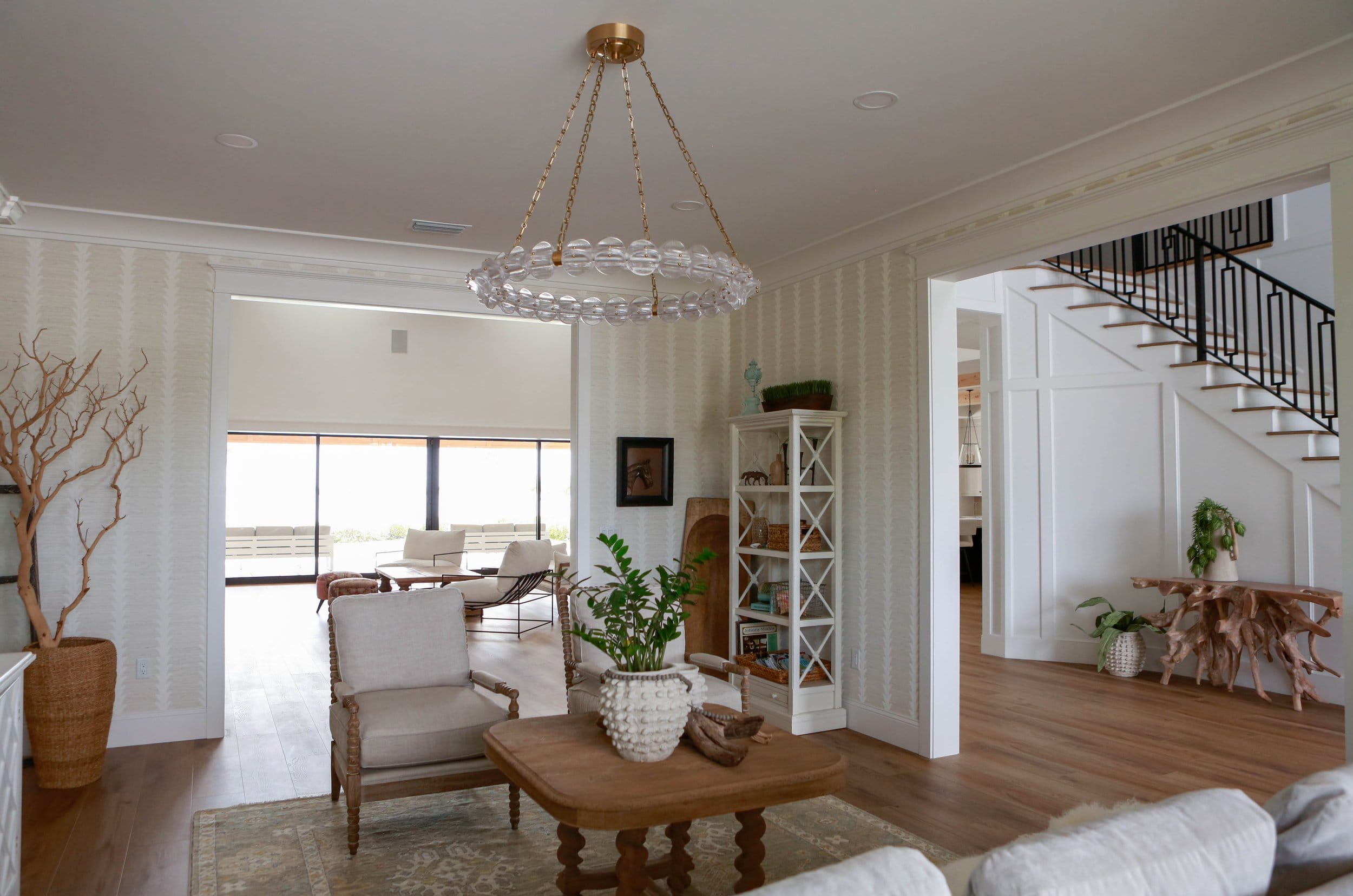
Florida coastal homes are getting tactile in 2026. After years of minimal, bleached-out interiors and barely-there finishes, designers are reintroducing natural materials with weight, grain, and presence.
This might be oiled hardwoods instead of engineered planks, or honed limestone, travertine, and coral stone that feel cool underfoot. You could see bronze hardware with real patina, and cane, plaster, or unlacquered brass that add richness and depth.
In modern homes, these materials are used with restraint: a massive wood island in an otherwise quiet kitchen, or natural stone walls that frame the horizon line. In more traditional builds, they help connect old-world character with new-world performance.
There’s also a growing appreciation for imperfection. Slight variation, visible grain, tonal shifts — all welcome. Because in homes that are increasingly precise, a little texture goes a long way.
Lifestyle & Customization: 2026 Home Design Trends in Florida
Personalization and Customization on the Waterfront
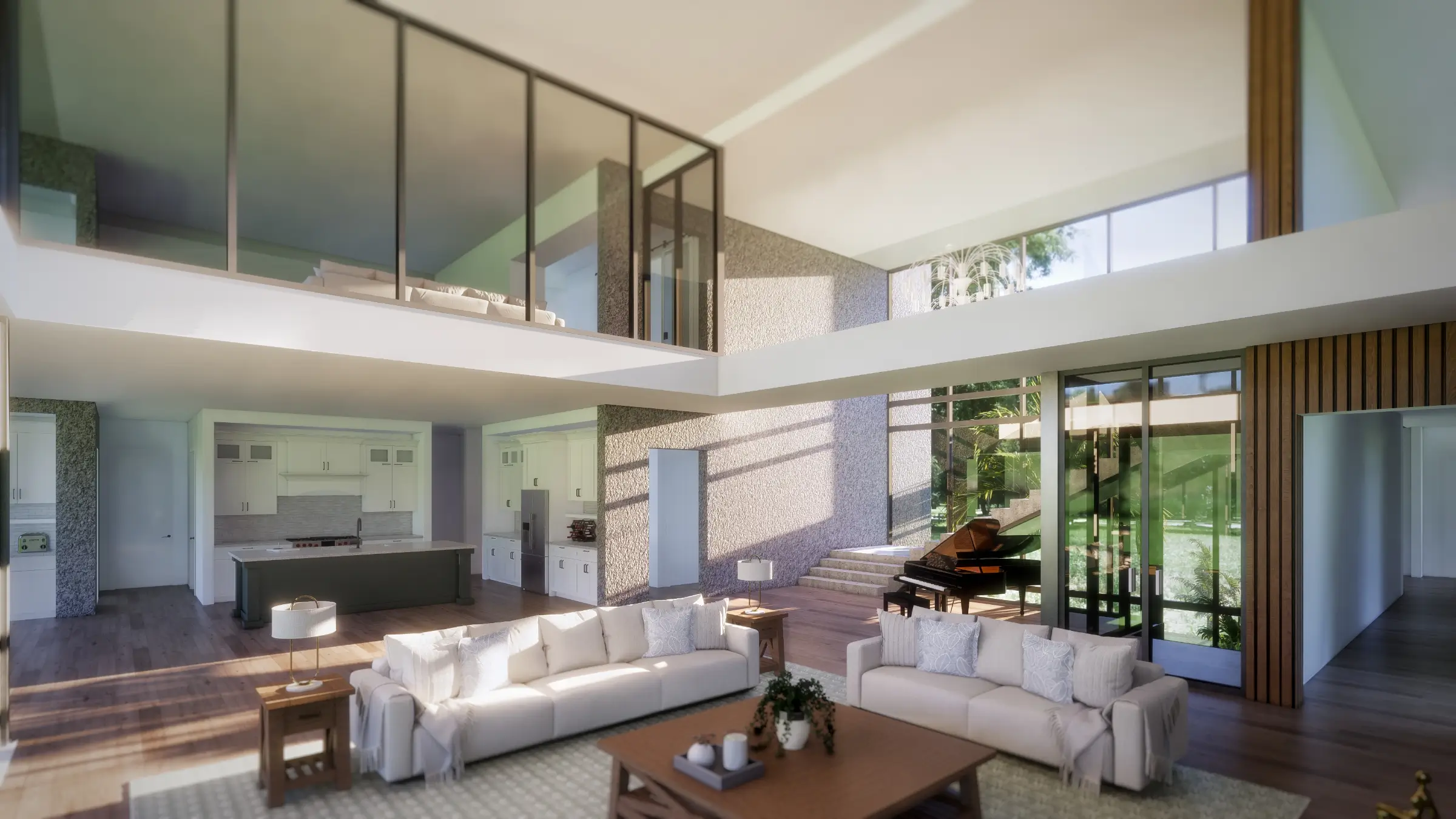
With premium land commanding premium prices, clients are more invested than ever in making every square foot count. That means floor plans shaped around how they live and where the views are. It could be a tucked-away yoga space that opens to the sunrise, or a pool courtyard designed around hosting crowds.
This trend toward personalization goes beyond layout. Material palettes are being built from scratch with fixtures hand-selected and millwork designed in tandem with furniture choices. And the architecture follows suit — more asymmetrical, more responsive, more story-driven.
Technology is playing a role, too. Digital modeling tools let clients walk through their home virtually before it’s built. Custom fabrications — from steel staircases to site-specific cabinetry — are easier and faster to produce. The result: homes that truly feel like they couldn’t belong to anyone else.
Build a Custom Florida Home that Fits You
If you’re planning a custom home on the Gulf Coast, we’re your team. We understand the intricacies of Southwest Florida coastal design and know how to make your home feel like you.
Reach out to Beacon Home Design to start planning.