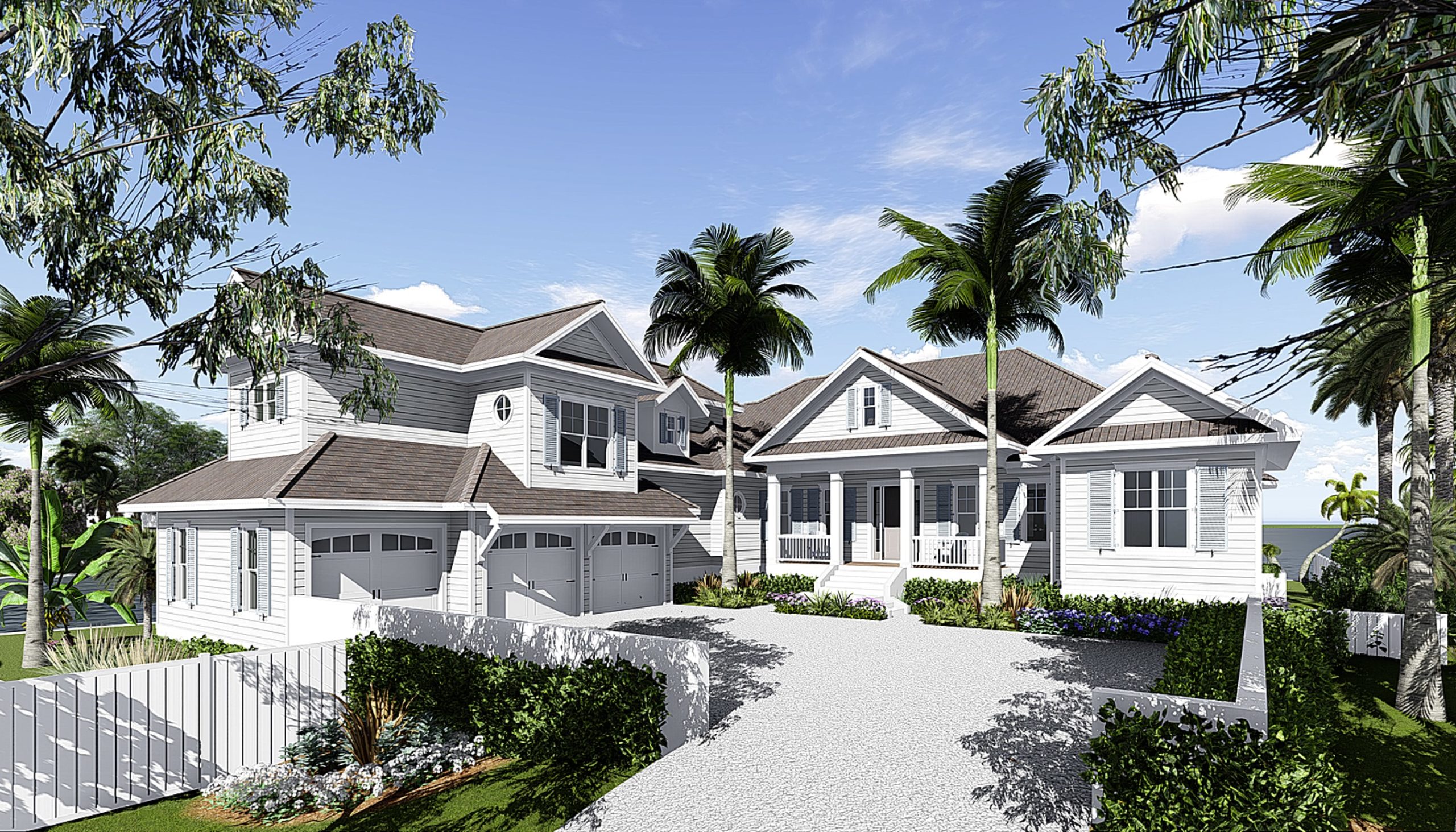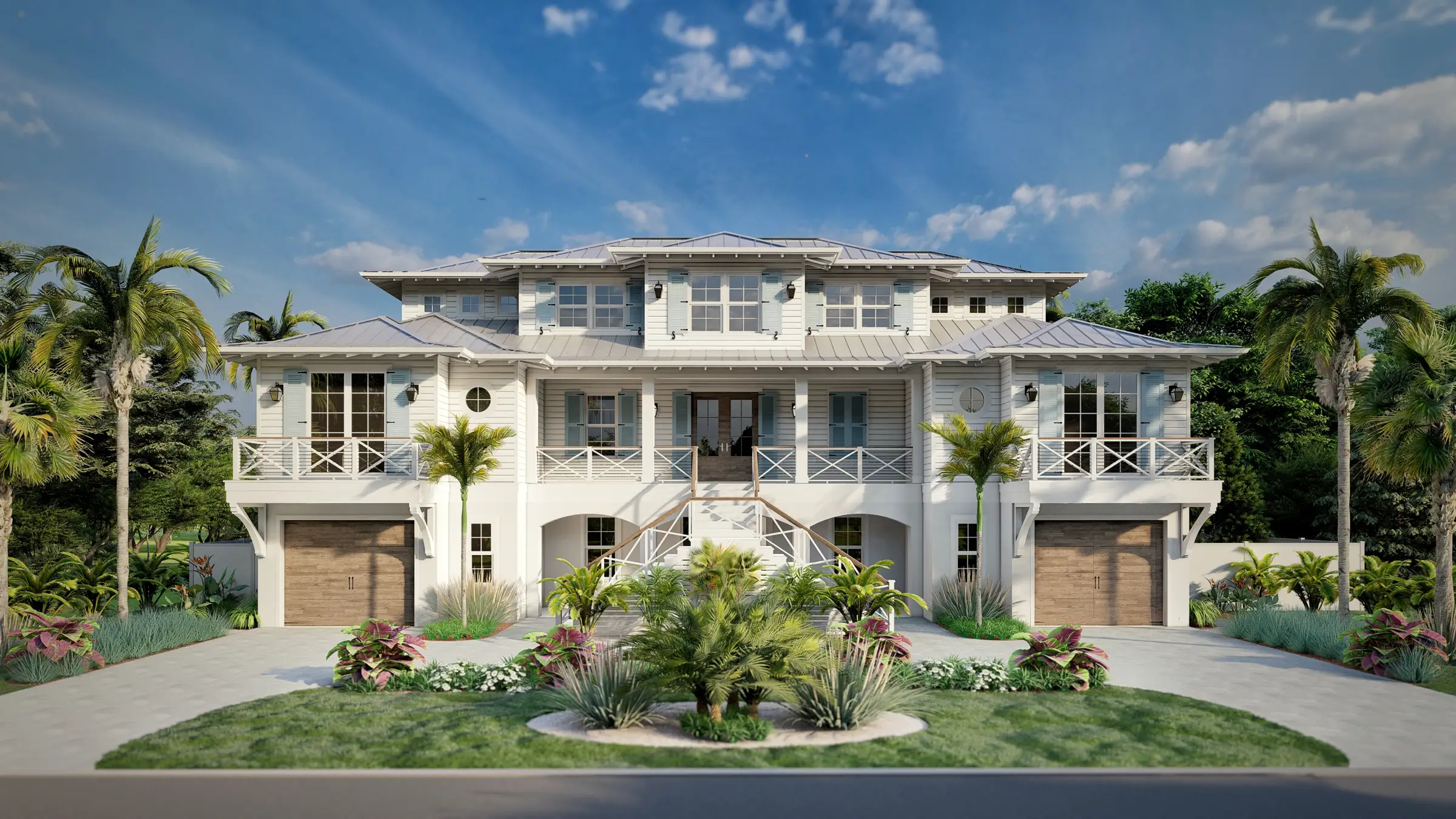
A Style Defined by Clarity, Light, and Intent
Walk into a contemporary home, and the first thing you notice is the clean design. Light moves easily across smooth walls. Rooms connect and flow. There’s space to breathe, and nothing to distract from the structure itself.
Contemporary home design favors clear shapes, simple surfaces, and interiors that feel open and uncluttered. Materials are chosen for feel as much as function: plaster that softens the light, wood that warms the floor, glass that opens a room to the sky.
In Florida, this approach works well. Sunlight, warmth, and the need for smooth indoor–outdoor flow all pair naturally with clean architecture. A contemporary home can be bright and airy without losing comfort, and refined without feeling rigid.
This style guide outlines the core features of contemporary design and how those ideas translate into a custom home in Florida’s environment.

What Is Contemporary Home Design?
Contemporary design doesn’t belong to a single era or movement. It shifts with the present moment, pulling from the styles, materials, and ideas that feel most relevant today. Where traditional styles have well-defined markers — the louvered shutters in West Indies design or the gabled roofs of Colonial — contemporary design stays open. It blends influences and edits them down to their simplest form.
Contemporary homes often borrow the warmth of organic materials, the clean lines of minimalism, or the lightness of Scandinavian design, but none of these elements dominate.
Because the style evolves, two contemporary homes can look different from each other, and both can still feel right. What matters is the approach: thoughtful proportions, smooth surfaces, and a willingness to refine or update as design expectations shift. In that sense, contemporary architecture stays contemporary by staying engaged with the present.
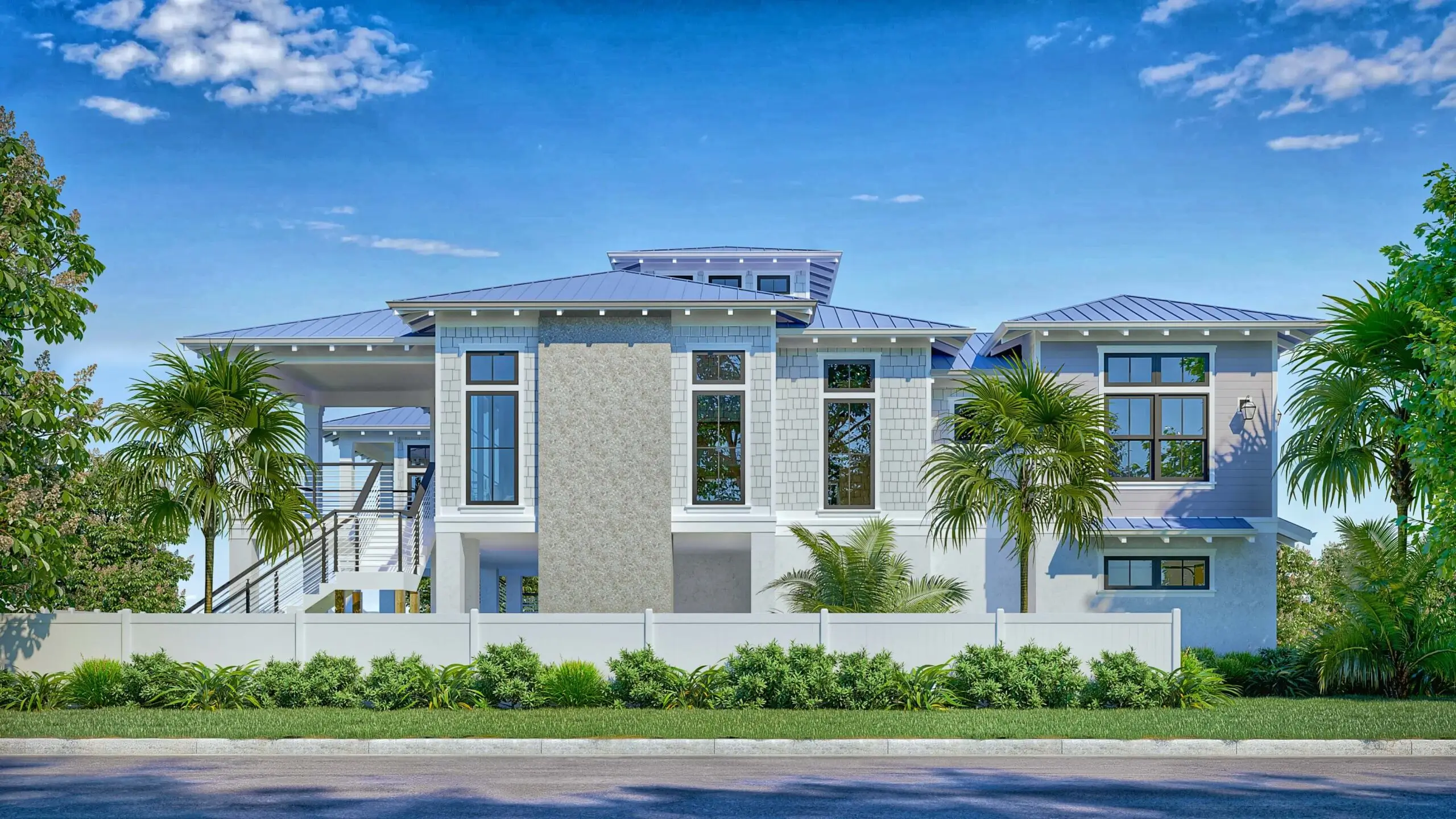
Materials & Finishes
The materials in a contemporary home are selected for clarity and practicality. Surfaces are smooth. Transitions are clean. Every texture is intentional and often subtle. However, this doesn’t mean cold or industrial. A contemporary palette can be soft and organic, but it avoids visual noise.
Common material choices include:
- Smooth stucco or plaster — clean planes that catch light evenly
- Natural wood — used sparingly, often in pale or medium tones, for warmth and contrast
- Metal accents — slim-profile steel or aluminum for railings, fixtures, and window frames
- Matte or satin finishes — for cabinetry, flooring, and wall surfaces to reduce glare and visual clutter
- Large-format tile or poured concrete — for floors or hardscaping with minimal seams
- Low-profile detailing — flush baseboards, hidden cabinet pulls, and frameless doors
Materials in contemporary design are never loud. They recede just enough to let the space become the focus.
Architectural Characteristics of Contemporary Homes
Contemporary homes are shaped more by intent than by tradition. Instead of following a fixed historical style, the design adapts to the needs of the space, the site, and the people who live there. What emerges is a calm, open structure that prioritizes proportion, light, and flow.
Typical characteristics include:
- Wide, uninterrupted wall planes — clear building forms without unnecessary complexity
- Open floor plans — minimal interior walls to promote light and movement
- Expansive glazing — large windows and sliding glass doors that create a connection to the outdoors
- Flat or low-sloped roofs — when site and code allow, these reinforce horizontal clarity
- Minimal trim and crisp transitions — a strong emphasis on geometry and proportion
- Asymmetry that feels balanced — not random or playful, but to create visual balance through contrast
- Minimal ornamentation — details are integrated into the form, not applied on top
Each element serves the larger idea: a home that feels coherent and uncluttered.
Color Palette & Interior Feel
Contemporary homes favor a calm, tonal palette. The architecture does most of the visual work, so color becomes a supporting element used to soften light, clarify edges, or create contrast with natural textures.
The base palette typically includes:
- Whites and soft grays — matte or low-sheen, chosen for warmth and light diffusion
- Pale earth tones — sand, stone, bone, or muted clay for floors or millwork
- Light wood tones — white oak, ash, or light walnut in natural or slightly washed finishes
- Dark accents — used sparingly: blackened metal, deep charcoal, or cool slate to define thresholds or frame openings
Color is rarely the focal point. Instead, it sets the atmosphere. The feel is open but never empty. Materials, scale, and shadow bring depth where color remains restrained.
Done well, this restraint creates a space that feels fresh, intentional, and comfortable.
Indoor–Outdoor Living in Contemporary Design
Contemporary homes are designed to open — not just visually, but spatially. Planes extend. Boundaries between inside and out begin to soften. This sense of openness isn’t decorative; it’s built into the architecture.
Key indoor–outdoor design elements include:
- Large sliding or pocketing doors that disappear into walls and connect shared spaces to the exterior
- Covered outdoor areas that act as architectural extensions of the interior plan
- Level floor transitions for seamless movement from living room to lanai, kitchen to patio
- Consistent ceiling treatments that carry across the threshold and unify the interior with the landscape
- Integrated hardscaping — concrete, stone, or tile that reflects the interior material language outdoors
- Oriented views and breezeways — designed around light, airflow, and privacy
When done well, a contemporary home feels as usable outside as it does in. It’s not about adding a view. It’s about expanding how you live.
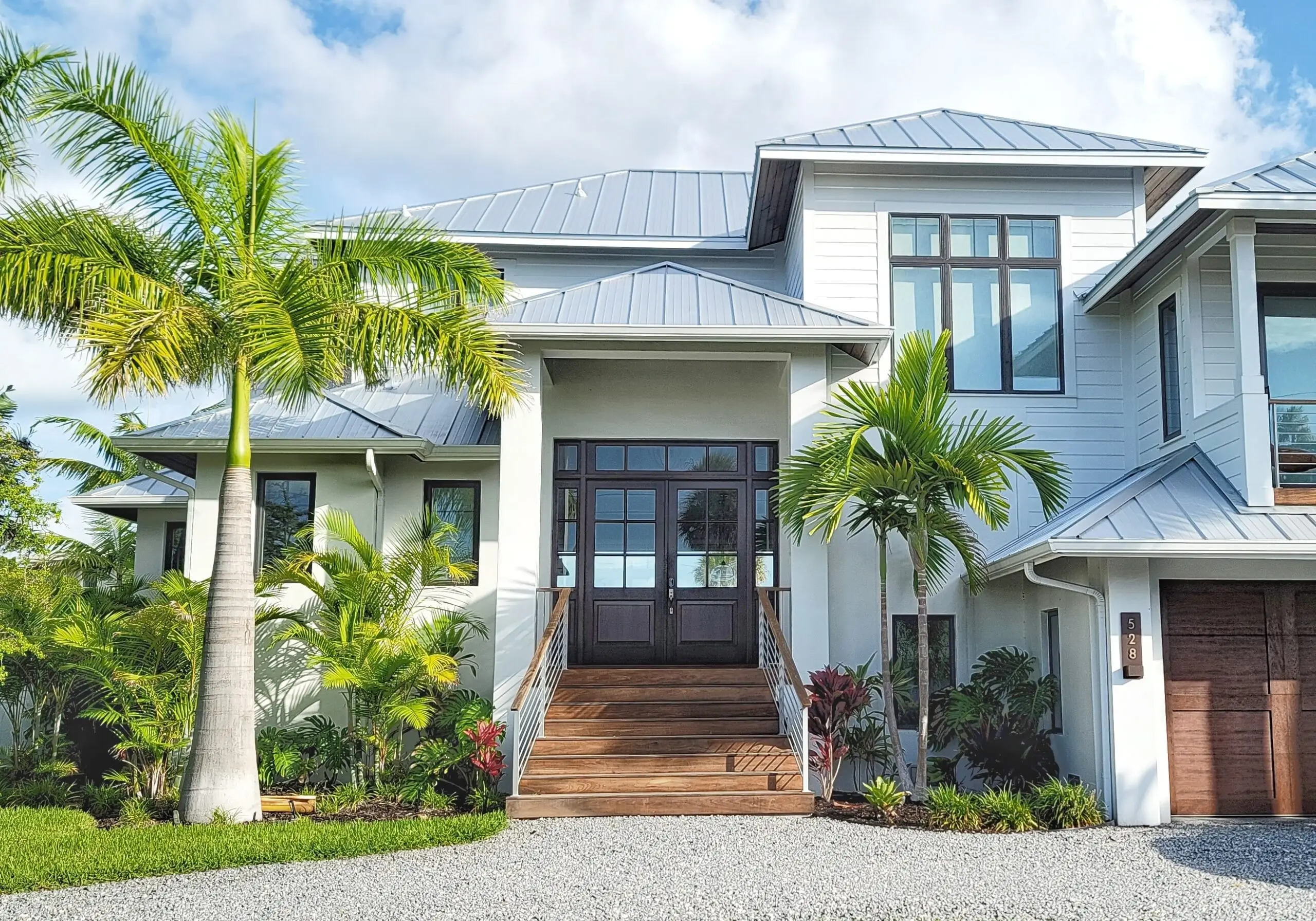
Climate-Ready Features for Florida Homes
A contemporary home in Florida must do more than look refined — it has to perform. Light, heat, salt air, and seasonal storms all shape how a home ages and functions here. Contemporary design adapts well to these demands, as long as it’s built with the climate in mind from the start.
Beacon designs contemporary homes with features like:
- Deep roof overhangs that provide shade and reduce solar gain
- Impact-rated windows and doors for hurricane protection and year-round durability
- High-performance glazing that filters UV while preserving natural light
- Ventilated assemblies and thermal breaks to control heat and moisture
- Salt-tolerant exterior finishes — including coated metals, cementitious surfaces, and stabilized woods
- Site-specific drainage strategies that account for stormwater and elevation
- Orientation and cross-ventilation designed to work with Florida’s light and breeze patterns
Why Homeowners Choose Contemporary
Contemporary design offers a framework for living that’s open and adaptable. Instead of dictating a theme, it creates room for light, movement, and change over time.
There’s a sense of calm in the way these homes are organized. Spaces feel curated but not rigid. Interiors are flexible by design, with layouts that can shift over time without losing their integrity. Windows are placed well for views and to connect each room to its surroundings with purpose.
For many people, that’s the appeal. A contemporary home stays grounded in the present, without being tied to the latest trends, and continues to feel relevant long after the plans are drawn.
Contemporary Blends
Contemporary design is inherently flexible. That adaptability makes it especially suited to regional and cultural blends.
At Beacon, we often design homes that carry the spirit of contemporary architecture while drawing from other vernaculars. These aren’t hybrid styles for their own sake. Each blend reflects a specific setting, a lived context, or a way of life in Florida’s unique environments.
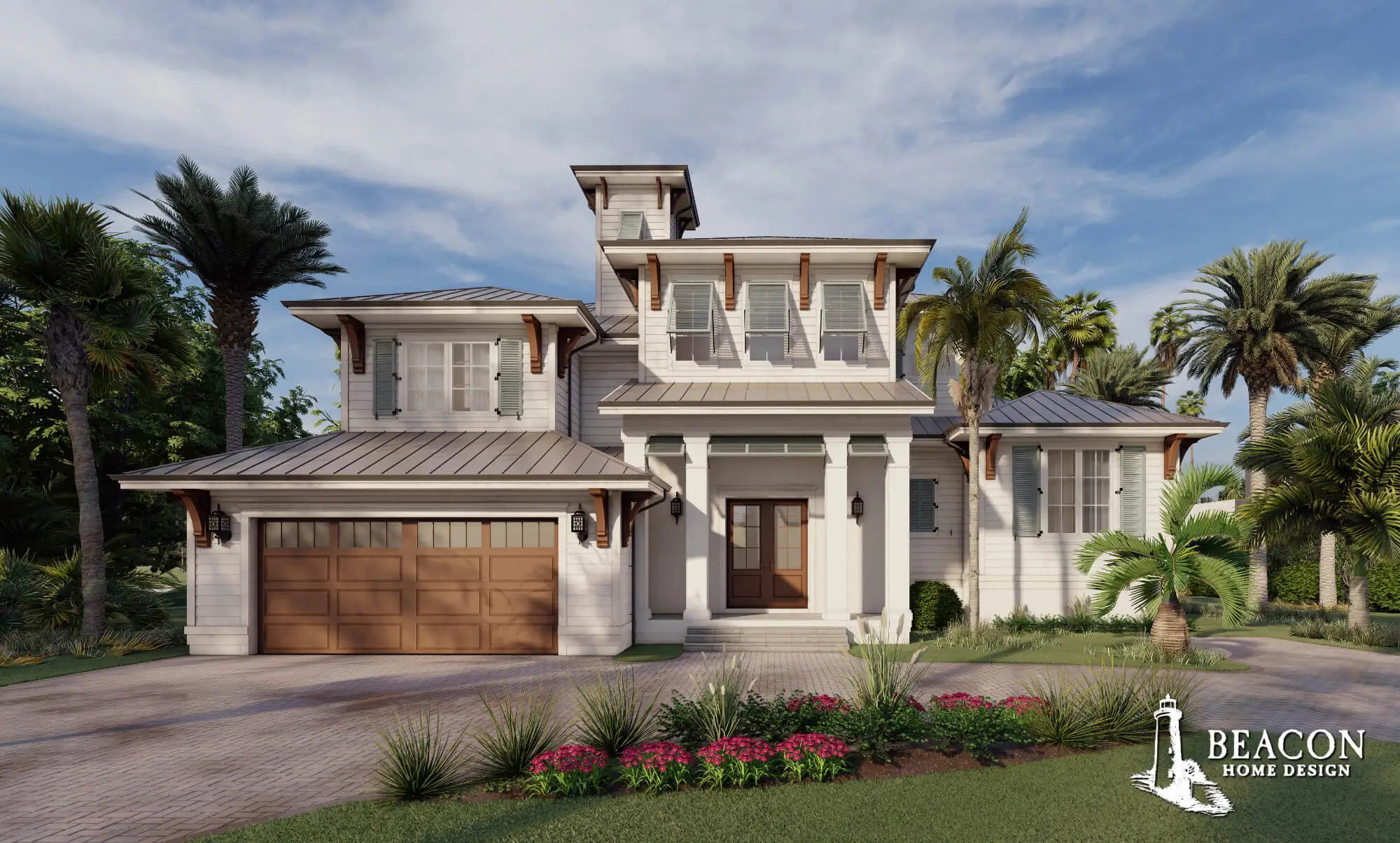
Coastal Contemporary
Expect low, horizontal massing with generous glass openings, deep overhangs for shade, and a muted palette that balances sun, salt, and sea air. The feel is light and open, built for breezes, long views, and indoor–outdoor ease.
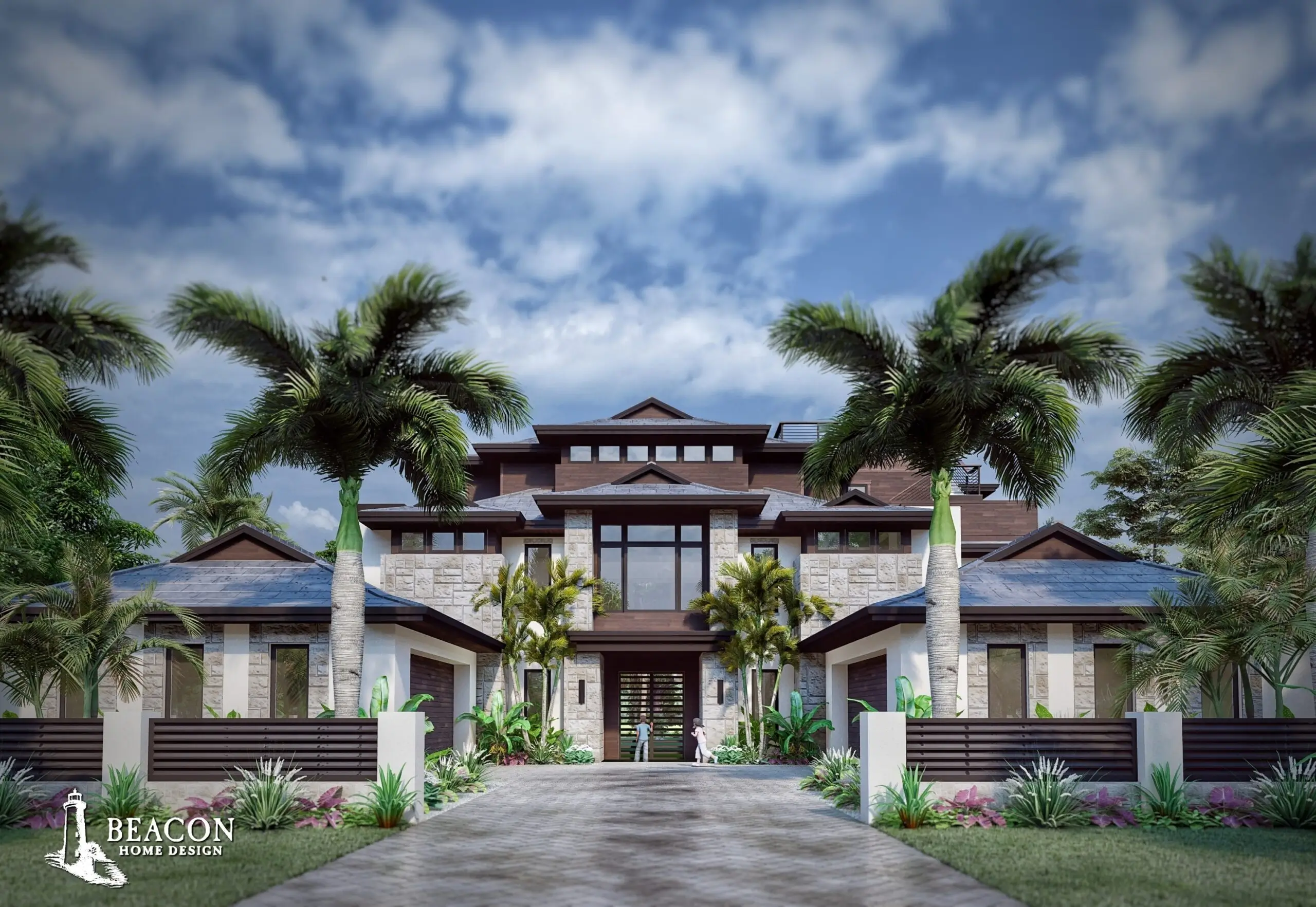
Bali Contemporary
Inspired by Southeast Asian modernism, this blend brings in natural textures and pavilion-like forms. Rooflines lift to encourage airflow. Materials like stone, wood, and bronze add tactile richness. Spaces are often organized around gardens or courtyards, creating a slow rhythm and a sense of retreat.
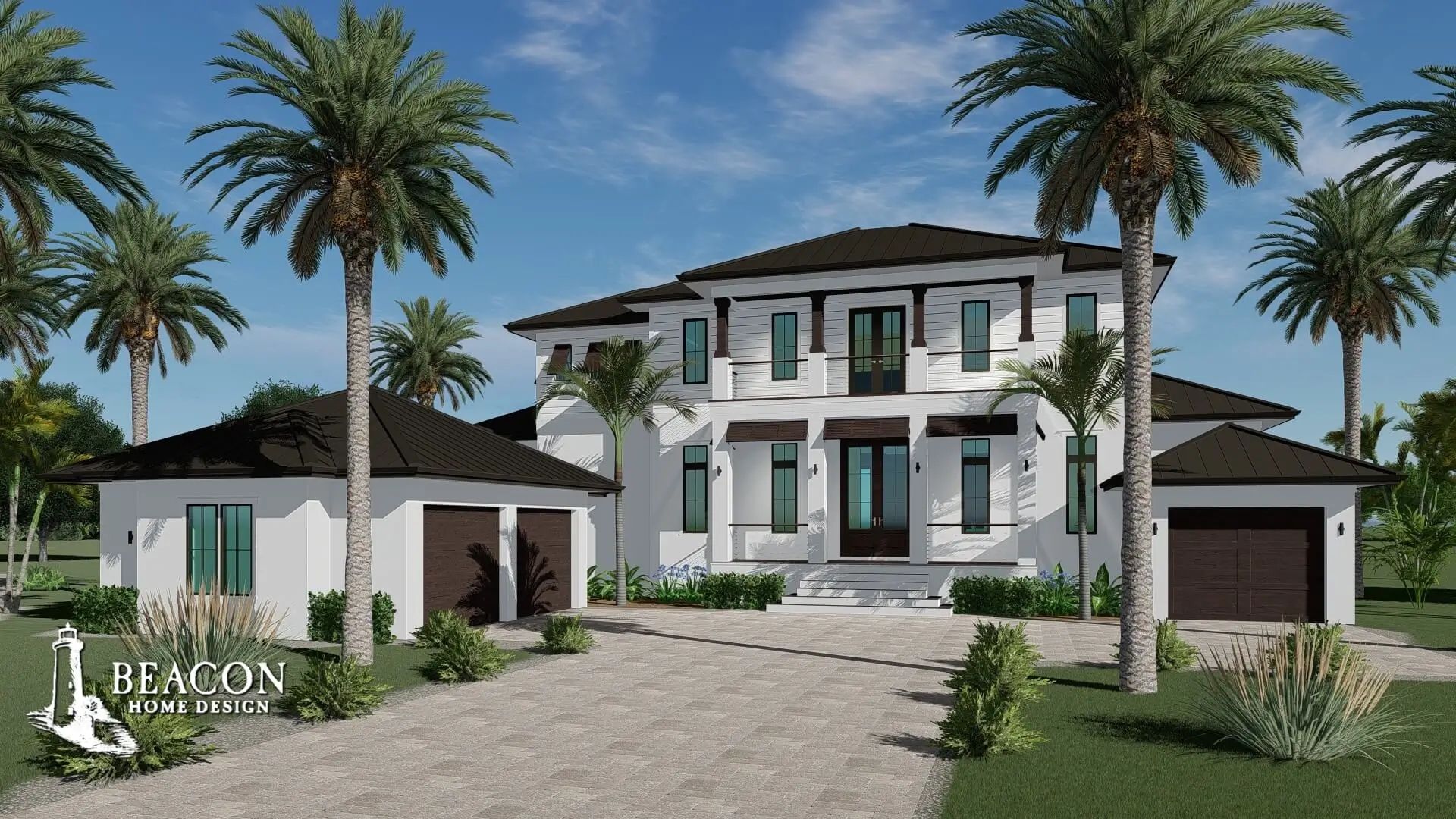
Contemporary Indies Blend
In this style, the clean lines of contemporary design meet the structural logic of West Indies architecture. Louvered shutters, pitched rooflines, and elevated living areas retain their functional roots, but the detailing is sharpened — less colonial, more composed.
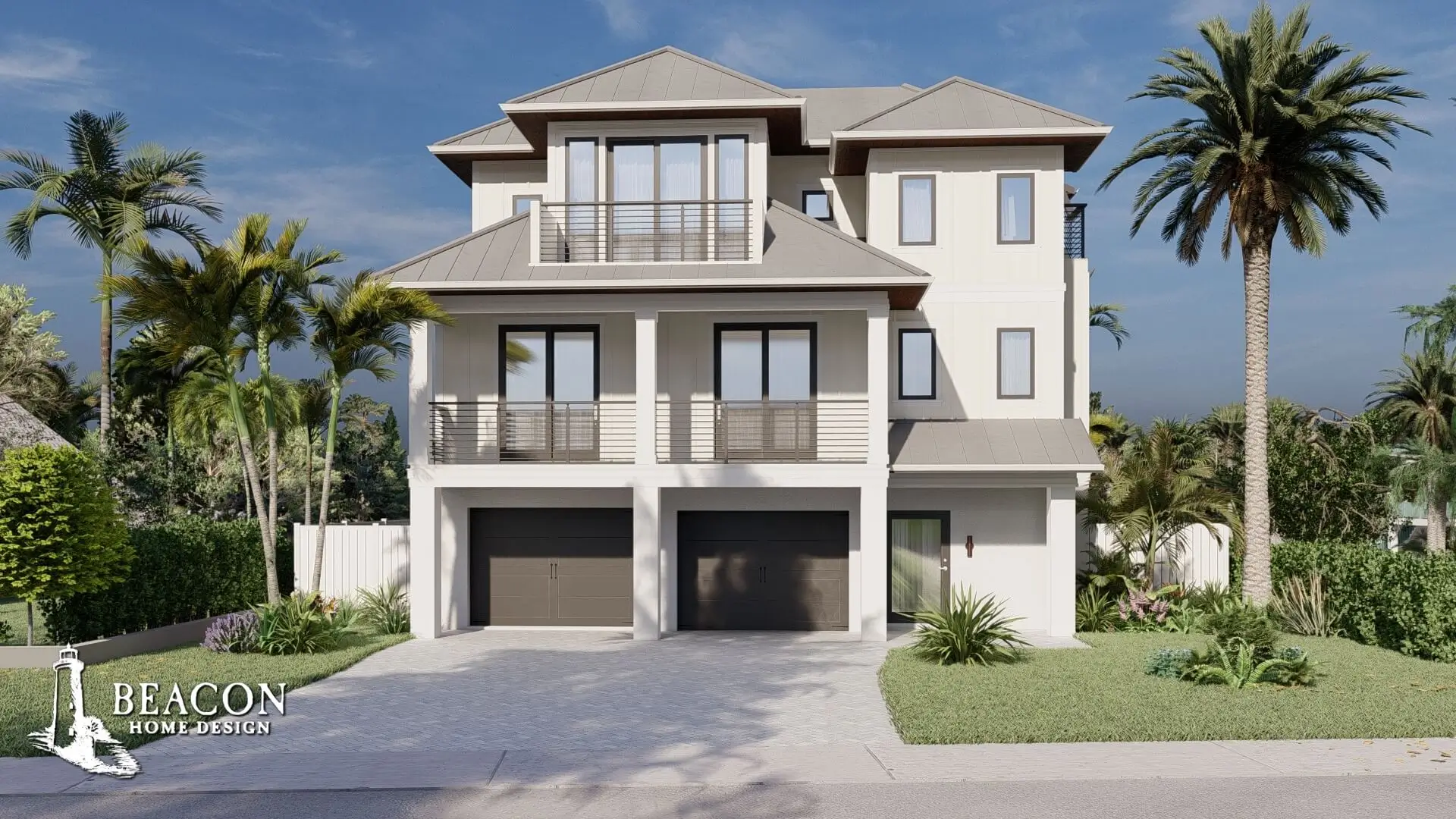
North End Coastal Contemporary
Tied to the character of Florida’s older, more established coastal neighborhoods like the North End of Palm Beach, this approach tempers modern clarity with local charm. Roofs are simple but pitched. Volumes are clean but familiar. The result is a home that fits the neighborhood while still feeling unmistakably current.
Designing Your Contemporary Home with Beacon
We design contemporary homes that honor their climate and the people who live in them. Every project starts with listening to how you want to move through a space and what kind of feeling you want to come home to.We help you define what contemporary looks like for you, in this moment, on this piece of land. Whether you’re building on the Gulf Coast, in a quiet inland neighborhood, or on a narrow urban lot, we shape the architecture around the way you live and the environment it will live in.
If you’re considering a contemporary home in Florida, we’re here to help you design it with thought, balance, and precision.
Designing Your Contemporary Home with Beacon
Is contemporary the same as modern?
No. Modern design refers to a specific historical movement, often tied to mid-century architecture and minimalism. Contemporary design is more flexible. It reflects what feels current now. It often borrows from modern principles, but isn’t defined by them.
Can contemporary homes feel warm and comfortable?
Yes. Contemporary design uses restraint, but that doesn’t mean it’s cold. The warmth comes from natural light, organic materials, soft textures, and open space. It’s a quiet kind of comfort — calm, not cluttered.
Does contemporary design work in Florida’s climate?
Very well. The style’s clean forms and emphasis on openness translate beautifully to Florida’s environment. With the right materials, orientation, and planning, contemporary homes can be both beautiful and resilient, ready for heat, storms, and coastal conditions.
Can I mix contemporary with other styles?
Yes. One of the strengths of contemporary design is its ability to blend. It can carry elements from other aesthetics like coastal, Scandinavian, or transitional, as long as the overall composition stays clear and intentional.
Will a contemporary home feel dated in the future?
Not if it’s designed thoughtfully. Because contemporary homes aren’t locked into one specific look, they have room to evolve. Clean proportions, quality materials, and functional design tend to outlast surface-level trends.