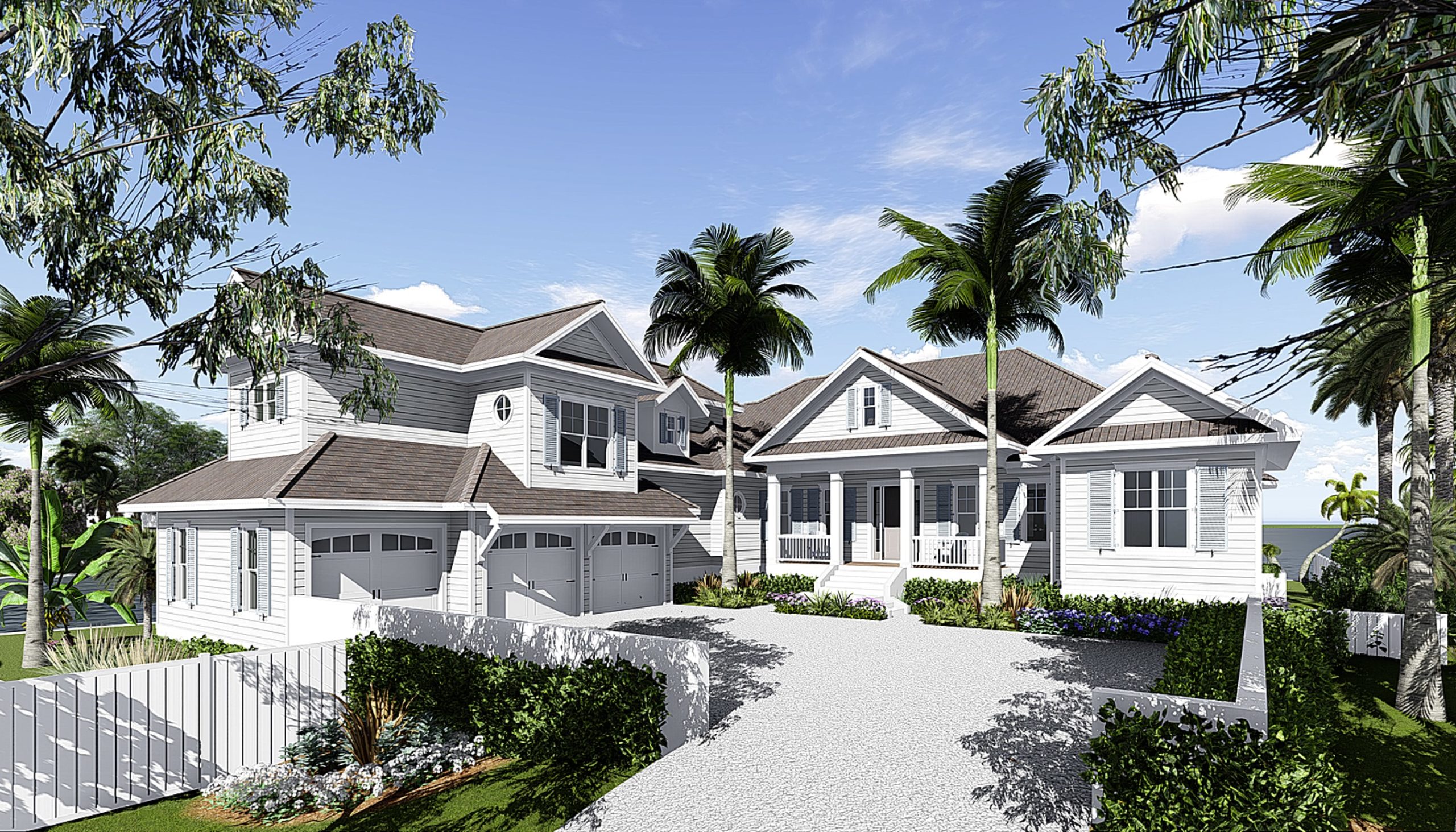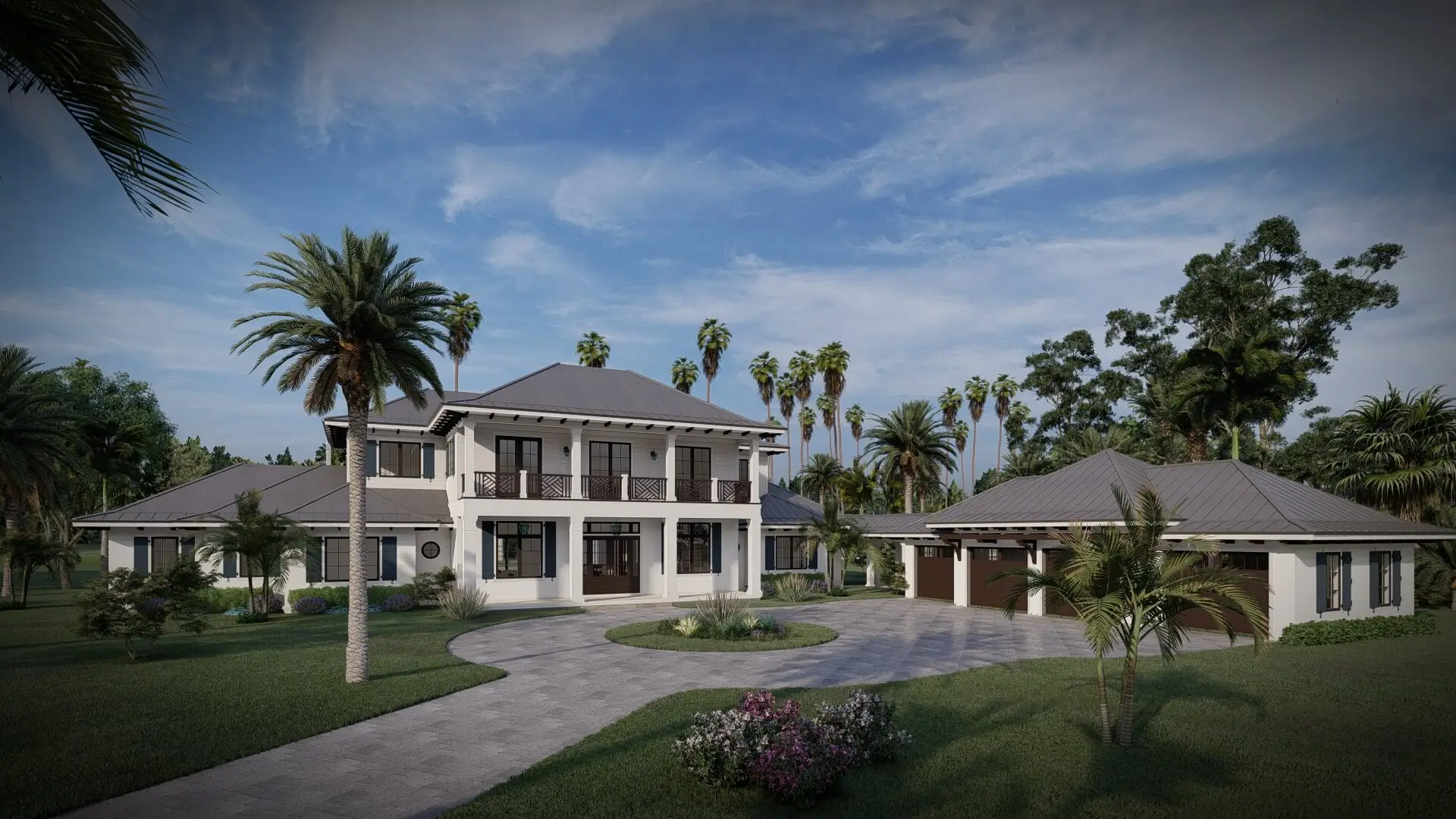
A Style Rooted in Air, Shade, and Balance
Designed centuries ago for the heat and humidity of the Caribbean, West Indies architecture evolved to make tropical living feel comfortable and beautifully composed. The homes were built for air to move freely and for people to gather under deep, shaded roofs.
Today, the West Indies style continues to shape homes across Florida’s Gulf Coast and barrier islands. Its quiet symmetry, wide verandas, and natural materials feel perfectly at home here because they were made for it from the start.
In this guide, we’ll walk through the defining elements of West Indies architecture and show how Beacon designs homes that honor its history while meeting the needs of modern living in Florida.
What Is West Indies Home Design?
West Indies architecture traces its roots to the colonial-era Caribbean, where European building forms were reshaped by heat, humidity, and island life. The result was a hybrid style, one that blended symmetry and structure with the climate of the tropics.
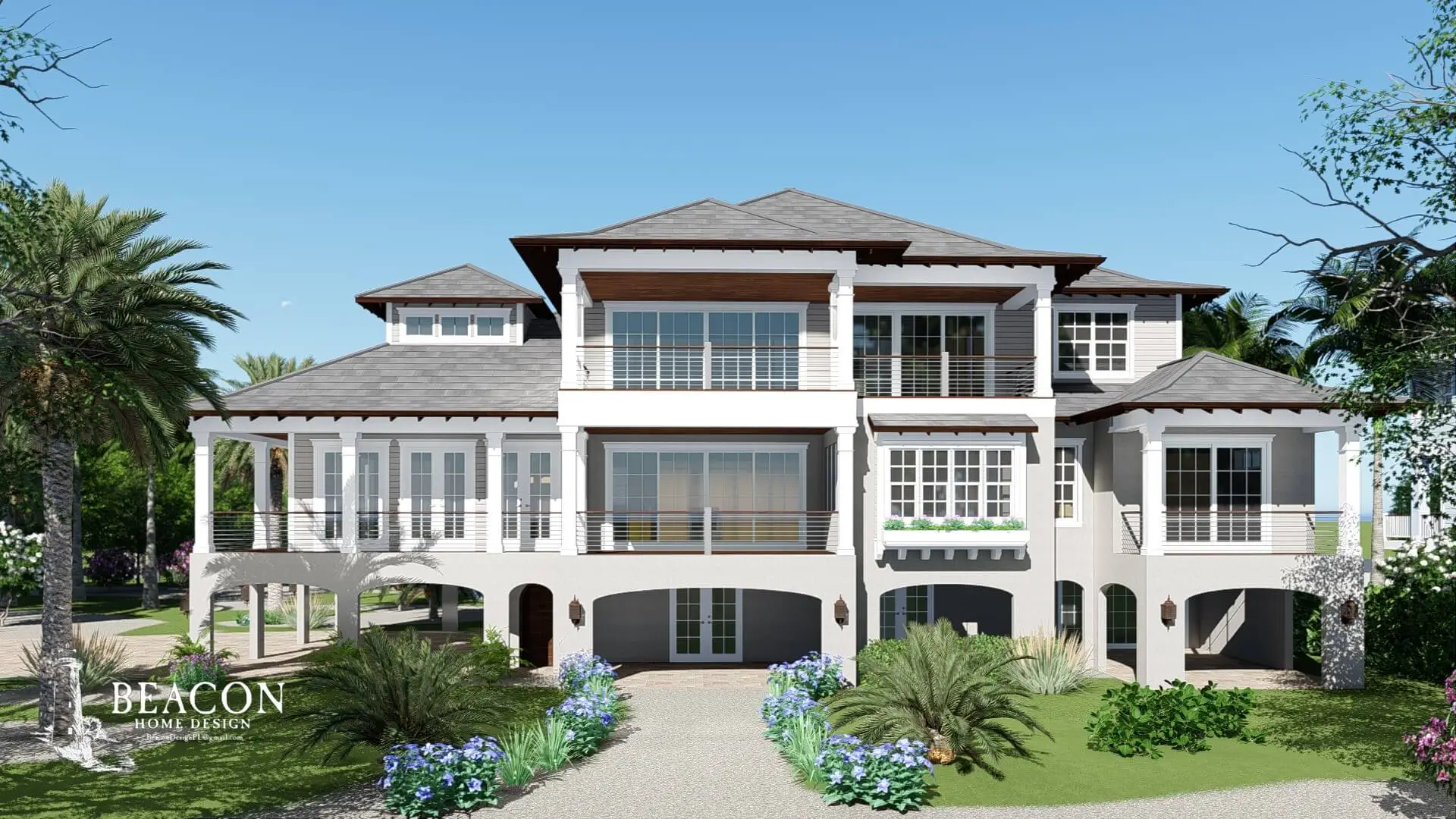
You’ll recognize it by its wide, shaded porches, tall shuttered windows, deep roof overhangs, and balanced proportions. These homes were designed to breathe. Air moved through high-ceilinged rooms and across wraparound verandas, cooling the interior long before mechanical systems existed. Every element had a purpose — not just to shelter, but to soothe.
In Florida, West Indies design feels both appropriate and enduring. It brings the presence of tradition without excess. There’s elegance in its restraint, and ease in its planning.
Architectural Characteristics of West Indies Homes
West Indies homes express balance through form, flow, and proportion. The architecture is quiet but considered, each element designed for performance first, and beauty second.
Key features include:
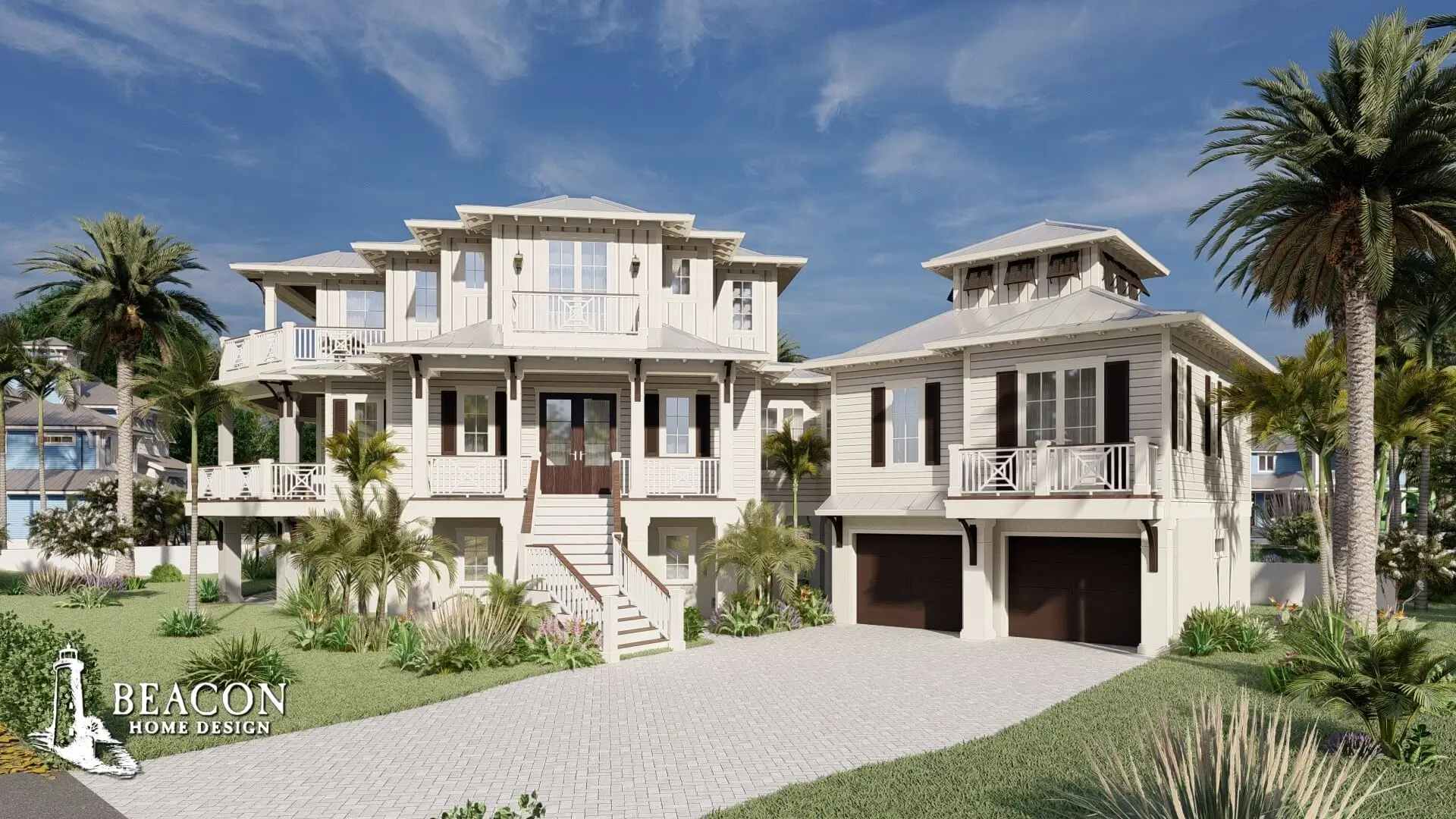
- Hipped or gabled roofs with deep overhangs, designed to shed rain and shade the walls below.
- Cupolas, dormers, or gable vents placed at the roof peak to vent rising heat and encourage airflow.
- Symmetrical façades centered around a front entry, with evenly spaced shuttered windows.
- Wraparound verandas integrated under the main roof, blurring the line between interior and exterior.
- Elevated foundations, originally for ventilation and storm protection, now also for visual presence and code compliance.
- Columns and railings that define the edges of outdoor rooms and give rhythm to the architecture.
- Tall ceilings and axial floor plans that move people and air with ease toward light, breeze, and outdoor space.
What we now recognize as timeless style began as smart, climate-driven design. When handled with care, these elements create homes that are as livable today as they were centuries ago.
Materials & Finishes
The materials in West Indies homes are chosen for clarity, texture, and longevity. Surfaces feel crafted and intentional — not ornate, but detailed. Light and shadow do as much as color to shape the experience of the architecture.
Common materials and finishes include:
- Smooth stucco or painted masonry walls that brighten in the sun and soften in the shade.
- Metal or composite roofing with low profiles that echo traditional shake or tile while improving durability.
- Painted wood or composite shutters, columns, and railings, crafted to reflect historical joinery without the maintenance load.
- Clean, understated trimwork that frames windows and doors without visual clutter.
- Exposed rafter tails, tongue-and-groove ceilings, and wide-plank flooring, offering natural grain and a sense of tactile age.
- Interior materials like hardwood, stone, and wood paneling used with restraint.
These homes are not over-decorated. Their richness comes from the harmony of surface and structure.
Color Palette & Interior Feel
The West Indies palette draws from the landscape. Walls are typically finished in warm whites or soft neutrals that reflect the sun without harshness. These light tones give the home a sense of clarity, and let shadows and woodwork do the visual work.
Typical color cues:
- Warm white or soft neutral walls that reflect light gently and create calm, breathable interiors.
- Contrasting shutters and trim in rich browns, slate grays, charcoal blues, or muted greens that define the form and frame the architecture.
- Textural accents from materials like coral stone, woven cane, aged wood, or unlacquered metal.
- High ceilings and open walls that support passive cooling and ambient movement of air and light.
- Filtered light from slatted louvers, deep porch overhangs, or pergola elements that soften transitions and shade the interior.
It’s not a palette built for trend or spectacle. It’s designed to age well, to soften over time, and to feel lived in, even when newly built.
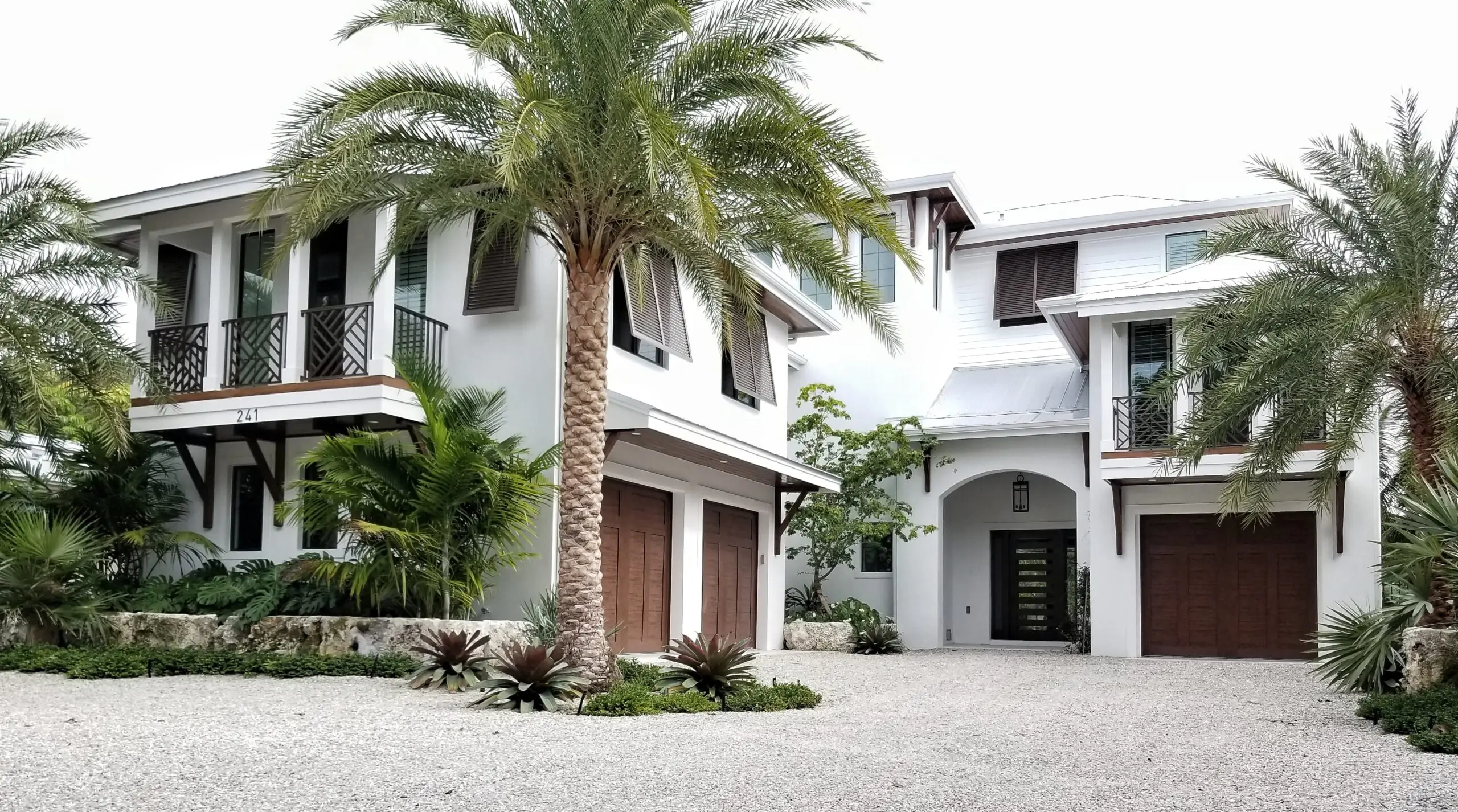
Indoor–Outdoor Living in West Indies Design
In a true West Indies home, outdoor living is part of the architecture. Verandas are treated as primary spaces, shaded and proportioned to be used all day, in every season. The line between indoors and out is layered — softened by shutters, framed by columns, cooled by the quiet sweep of a ceiling fan.
Key design strategies include:
- Verandas integrated under the main roofline, positioned for both comfort and cross-ventilation.
- Tall French doors or sliders that connect interior rooms to shaded porches, terraces, or garden spaces.
- Consistent floor and ceiling treatments that allow a seamless flow between indoor and outdoor zones.
- Shutters and columns that frame open-air rooms, adding depth and privacy without full enclosure.
- Covered dining or sitting areas positioned for everyday use, not just occasional retreat.
- Landscape edges and wide eaves that blur thresholds and extend livable space into the site.
Climate-Ready Design Built for Florida
West Indies homes weren’t created to withstand the heat, wind, and humidity. That’s what makes them such a natural fit for Florida. Their trademark features — wide overhangs, shaded verandas, open-air flow — align perfectly with the realities of this climate.
At Beacon, we preserve that performance-first approach while updating the details for today’s standards. For instance, we engineer rooflines for wind uplift and storm resilience, pair shuttered openings with impact-rated glazing, and select materials for their resistance to moisture, salt air, and ultraviolet exposure.
Elevated foundations, site-specific drainage strategies, and modern building envelopes help protect against flood risk and thermal gain. Where possible, we design for passive cooling — orienting openings to encourage cross-ventilation and limiting direct solar exposure through thoughtful roof geometry and landscape integration.
Why Homeowners Choose the West Indies Style
West Indies homes offer a sense of ease. For many homeowners, that’s the lasting appeal.
There’s beauty in the symmetry, the long rooflines, the shutters and columns. There’s practicality in the layout, where rooms open easily to air and light, and outdoor spaces are livable. And there’s character in the details: the craft of the millwork, the depth of a porch, the weight of a wood shutter.
For those drawn to design with both history and purpose, West Indies style feels rooted. It connects to the place without forcing nostalgia and blends formality with softness.
Types of West Indies Style
The West Indies style is a family of regional influences. Across the Caribbean and coastal regions, those influences live on in a range of design interpretations.
For our designs, we draw from these traditions to create custom homes that are architecturally clear and climate-ready, while still responsive to site, lifestyle, and personal expression. Here are some of the most common types of West Indies architecture we work with:
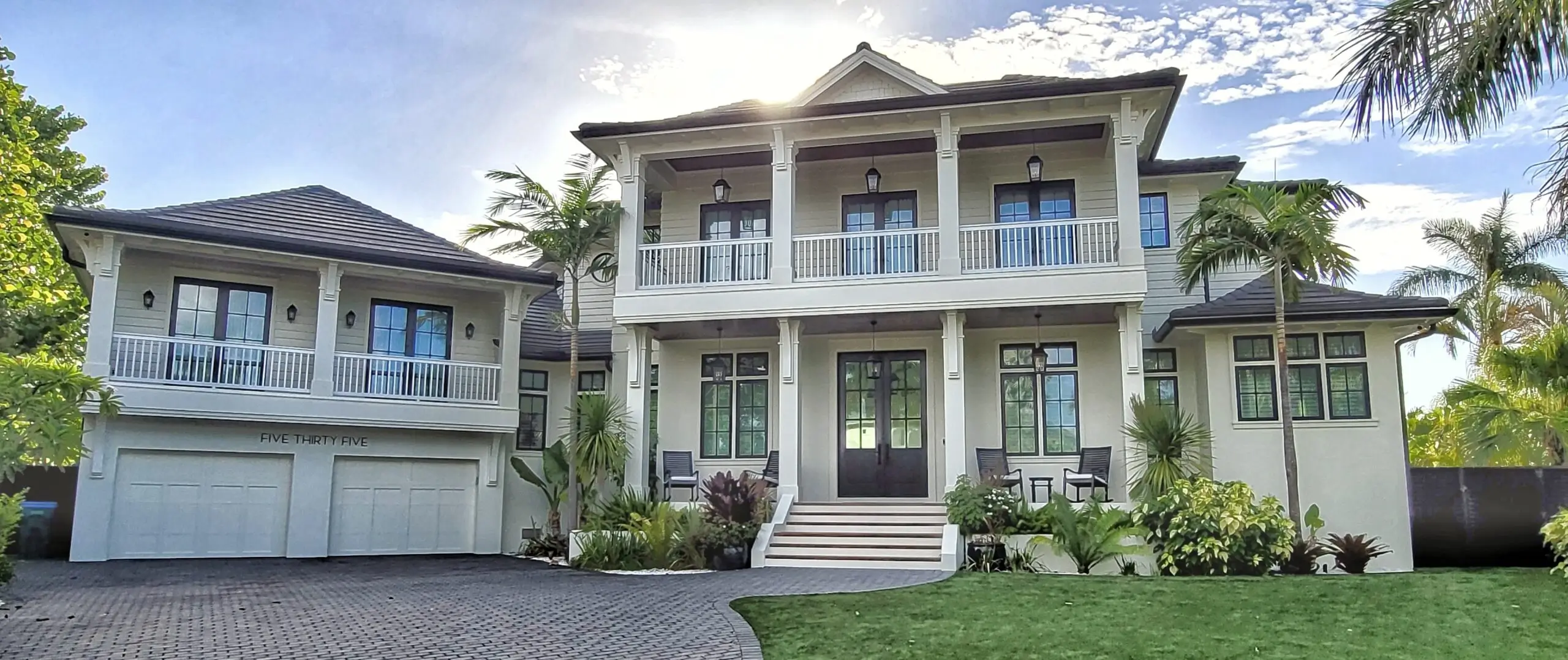
British West Indies
This is the most recognizable version — symmetrical, elevated, and classically proportioned. Hipped rooflines with generous overhangs, operable shutters, and shaded verandas. Traditional materials like wood and coral stone are handled with restraint, creating homes that feel airy and dignified.
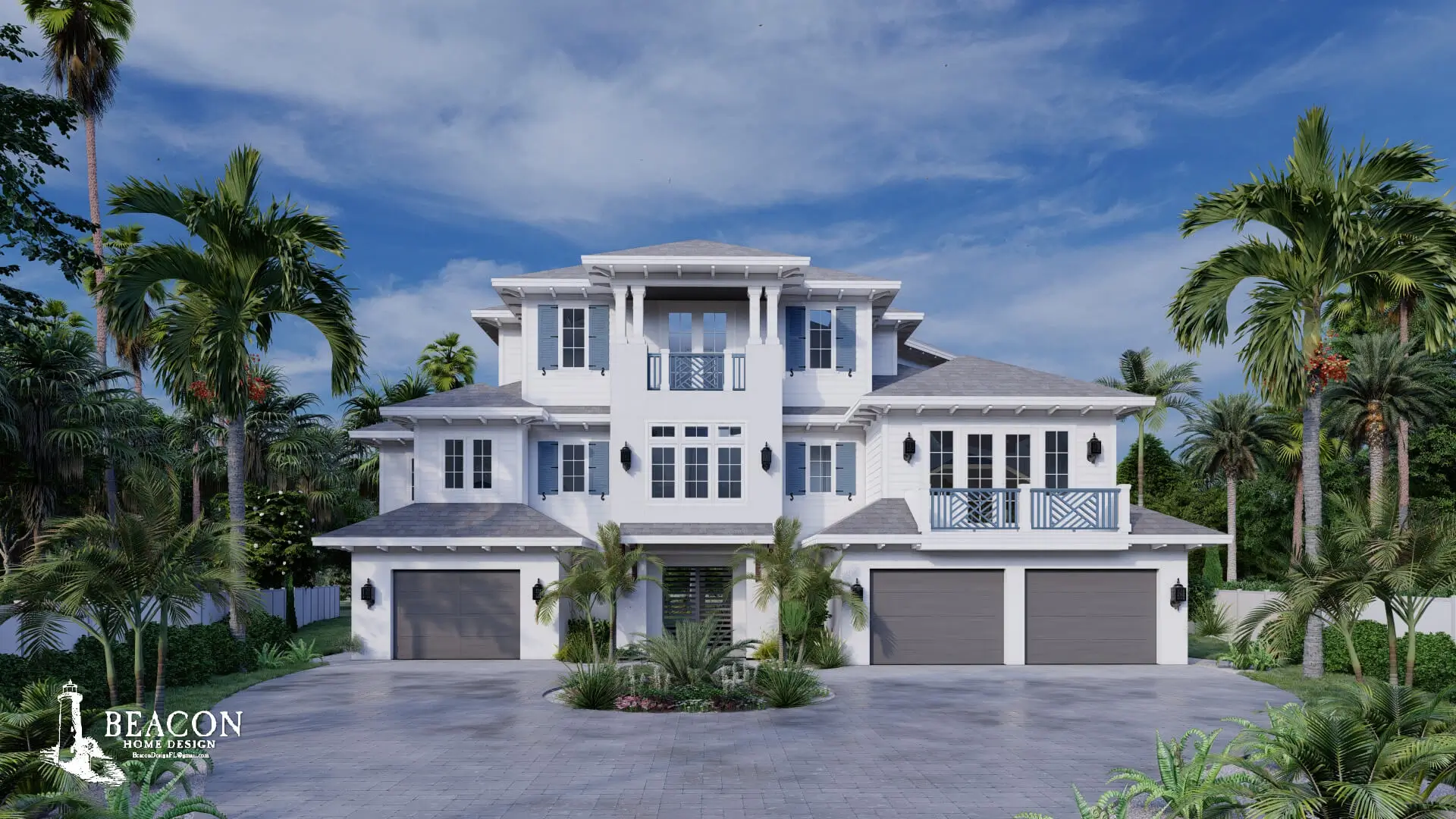
Coastal Indies Blend
A Florida-forward take that softens the formality of British roots with the lightness of coastal design. Rooflines may stay low and horizontal. Porches wrap and extend more casually. The architectural language remains West Indies, but it’s filtered through the clarity and openness of coastal living.
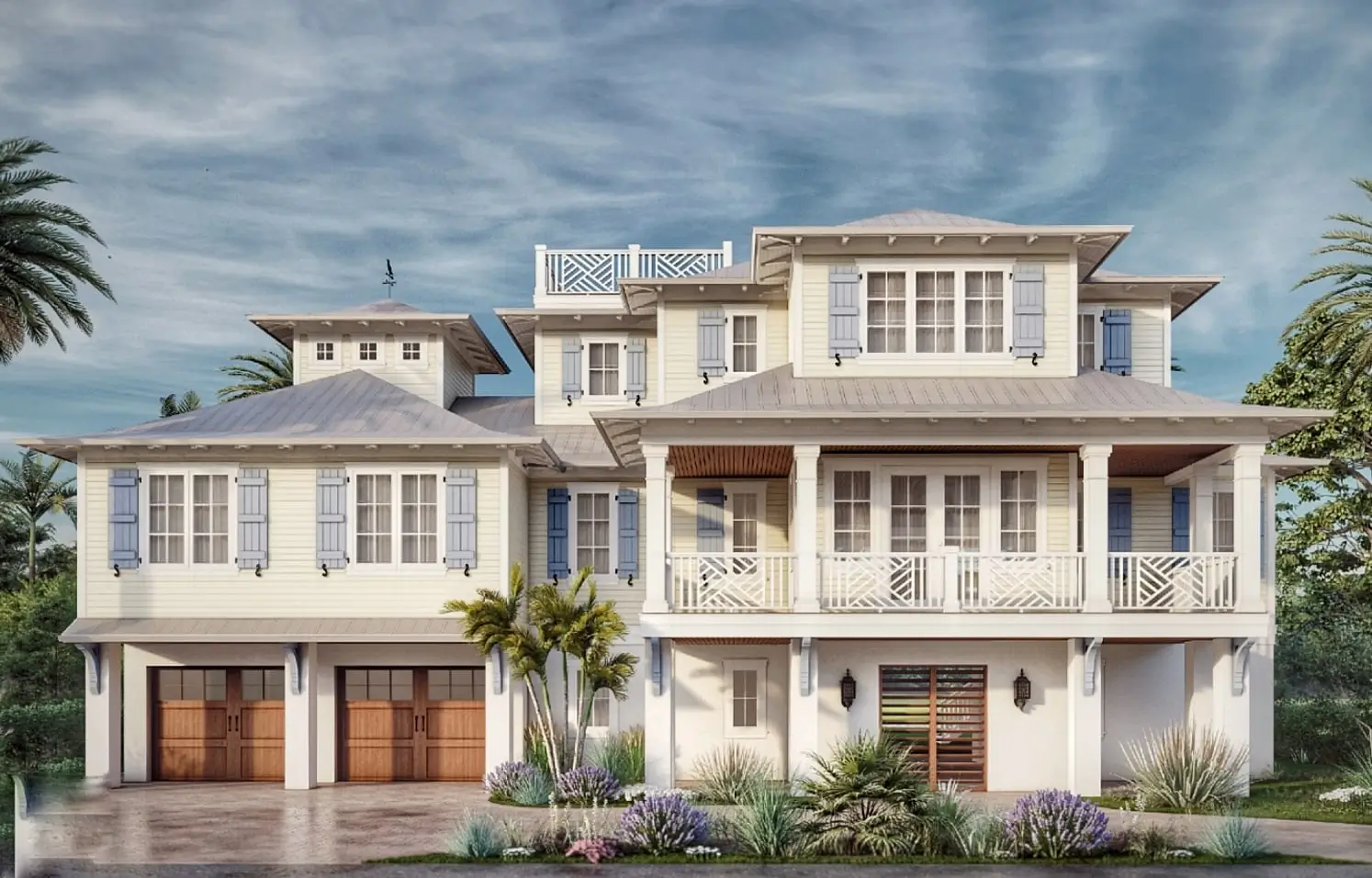
Tropical West Indies
This version embraces flow and texture. Multiple rooflines, deep eaves, and breezeway connections create a compound-like layout that feels immersed in the landscape. Materials lean more organic: timber beams, thatch-inspired accents, stone pavers, and woven textures.
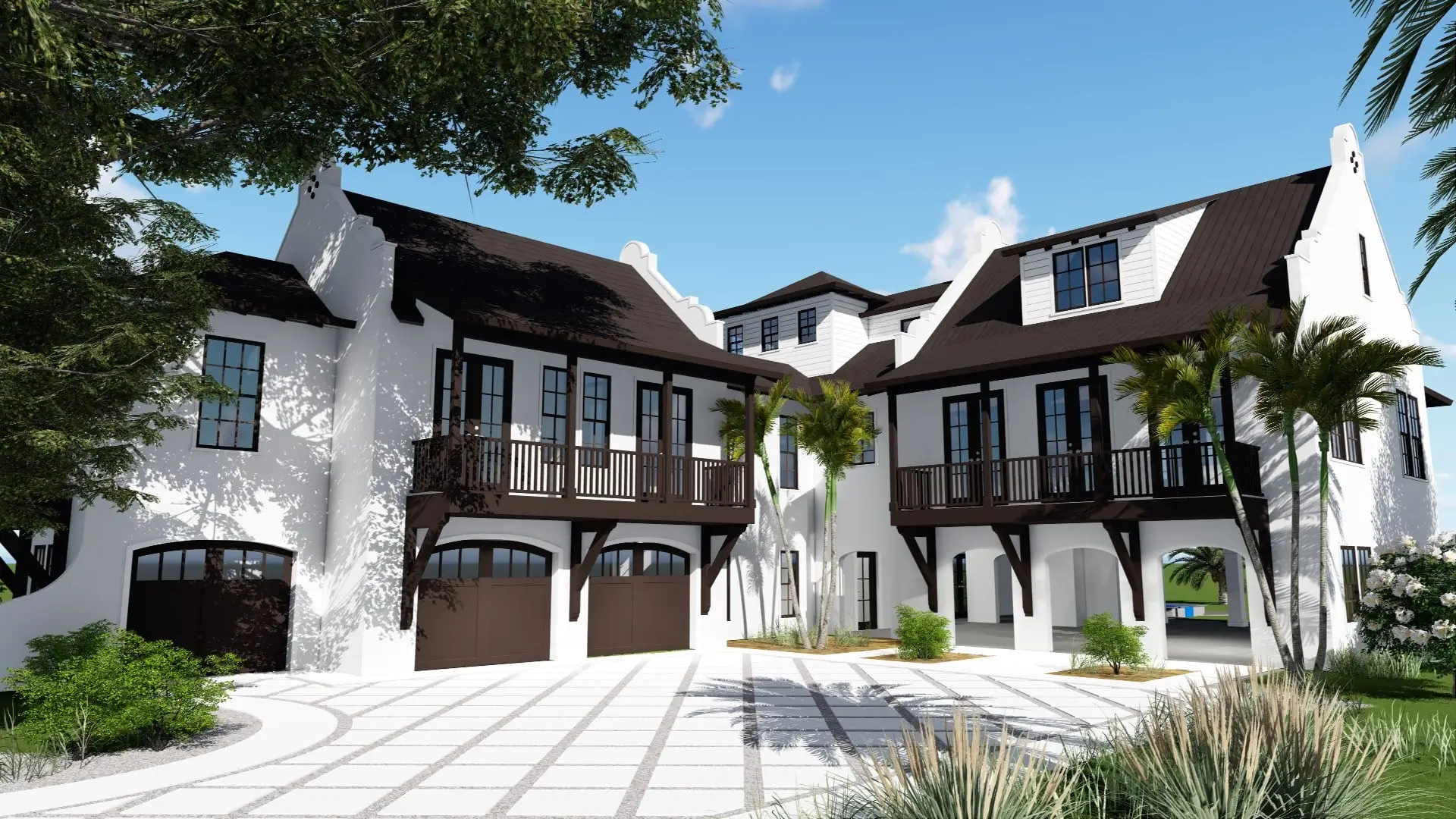
Dutch West Indies
This style reflects the colonial architecture found in islands like Curaçao and Aruba, where Dutch influence met the Caribbean. Gables are steeper and more decorative, often paired with brightly painted exteriors and shuttered windows. In Florida, this influence translates into bolder roof forms and a slightly more vertical feel — ideal for narrower sites or neighborhoods with height variation.
Designing Your West Indies Home with Beacon
We approach West Indies design with both respect and refinement. After gaining an understanding of what draws you to the style, we design a home that brings those elements into focus, shaped by your particular site and lifestyle.
We study how each space should function, and then we bring those principles forward into the design.
Whether you’re building on the water, in a historic neighborhood, or on a narrow lot that needs quiet creativity, we’ll help you craft a home that feels timeless, tailored, and entirely your own.
Frequently Asked Questions
What’s the difference between West Indies and British Colonial style?
West Indies design evolved from British Colonial roots, but it’s more climate-specific and locally adapted. Where British Colonial architecture often carries formal European lines, West Indies homes are more relaxed and better suited to heat, humidity, and tropical airflow. The proportions are looser, the detailing lighter, and the emphasis on outdoor living is stronger.
Can West Indies style work on a modern lot?
Yes. The style adapts well to a range of lot shapes and locations. It’s particularly well suited to wider sites, but with thoughtful planning, it can be scaled for urban infill or narrow coastal parcels while preserving its character and flow.
Can West Indies style be blended with other aesthetics?
Yes. It pairs especially well with coastal, transitional, and contemporary interiors. The clean lines and breathable layout make it a strong foundation for layering in other textures and details, as long as the architecture stays cohesive and well proportioned.